A selection of Graham’s most recent publications
Skip to: Conference papers … Academic papers … LTT columns … Other publications
Conference papers
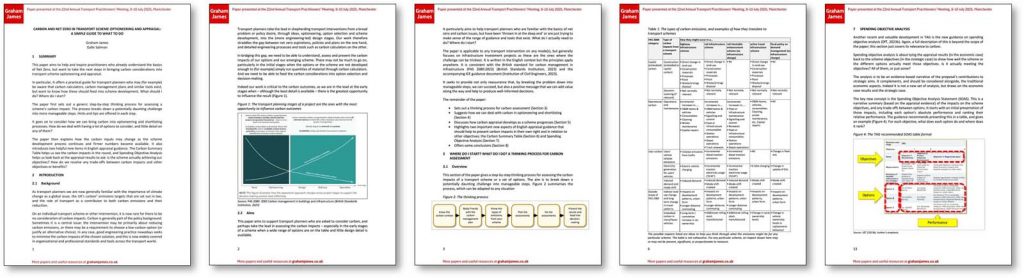
Carbon and net zero in transport scheme optioneering and appraisal – a simple guide to what to do (922k PDF) Transport Practitioners Meeting, 2025 (also slides here)
So we understand the need for Net Zero, and what carbon calculators and management plans are about. But how do we draw this into our work? This paper is a practical ‘where do I start?’ guide for transport planners taking schemes through from optioneering to appraisal and business cases. What do we actually need to do? What if there’s a scheme objective around carbon – and what if there isn’t? What can we do in the early stages, before we have scheme designs for calculating emissions? The paper covers these and other practical questions, charting a path through the process.
Getting the best from the Active Mode Appraisal Toolkit (AMAT) (1.8MB PDF) Transport Practitioners Meeting, 2025 (also slides here)
Do you use the Active Mode Appraisal Toolkit (AMAT) to assess the benefits of active travel schemes? Are you considering it? Do you review results from it? This paper, based on extensive experience, will help you to get the best out of this valuable appraisal tool. After a brief introduction to AMAT, it goes through the key points of a typical scheme assessment, highlighting the trickier inputs and the considerations around them. It covers the opportunities to adapt AMAT to complex corridors or to support analysis of broader schemes, some pitfalls to avoid, and finally interpreting the results.
Analysing bus stop spacing in English cities – is current practice fit for purpose?
(4MB PDF) Priya Blakey, Omar Henderson, Graham James and Jack Waller, Transport Practitioners Meeting, 2023
The correct spacing of bus stops is a balance between access and in-vehicle journey times. A long-standing recommended maximum walking distance of 400m to a stop has influenced practice and guidance for many years, although recent research suggests that many people walk further. More detailed guidance points out that in a real-world urban street network, the 400m walk distance means stops should actually be spaced around 300m apart. The extent to which this advice is reflected on the ground in the UK has not been widely researched. But this is a vital step in understanding the accessibility of local bus networks.
This paper sets out the background, the principles of stop spacing, and a summary of the existing guidance. It shows a way to investigate bus stop spacing on existing routes in English cities and towns, using NAPTAN data and the National Public Transport Data Repository (NPTDR). Using this method, it examines four case study locations (Leeds, Manchester, Nottingham and Reading) to see how far the guidance is reflected in reality, and looks at possible factors underlying the differences between the case studies’ results. Finally, it considers what this means for public transport transport policy.
Getting the Best From A Multi-Criteria Appraisal Framework: Some Practical Tips (1.7MB PDF)Transport Practitioners Meeting, 2018
A Multi-Criteria Appraisal Framework (MCAF) is a powerful tool for sifting and selecting options at any stage of a transport project. But it is harder than it looks to get ‘right first time’ and to satisfy stakeholders and clients. This paper provides practical tips, based on experience, for what works, what doesn’t, and key decisions that will help to save time and effort along the way. It briefly recaps on how MCAF fits into a typical transport project, and what WebTAG and other technical guidance require. The focus is on the tips and “dos and don’ts” for an effective appraisal.
First Steps in Reopening Your Railway: Lessons from Current Experience (1.2MB PDF) Steve Cooper and Graham James, Transport Practitioners Meeting, Nottingham, 29-30 June 2016
This paper provides practical first steps for progressing a rail reopening proposal. In the current climate — with the growth agenda recognising rail’s economic value, but also devolution and funding constraints — local stakeholders increasingly need to take the lead on making these projects happen. Critical initial steps are to identify the needs to be met (the real purpose of the railway) and a funding package. Other early tasks include building an economic case and stakeholder support. A realistic approach to likely costs and delivery timescales is required. This paper, based on lessons from reopenings recently completed, in progress or being studied, as well as other relevant rail projects, gives the ‘state of the art’ and pointers for tackling these issues.
Academic papers
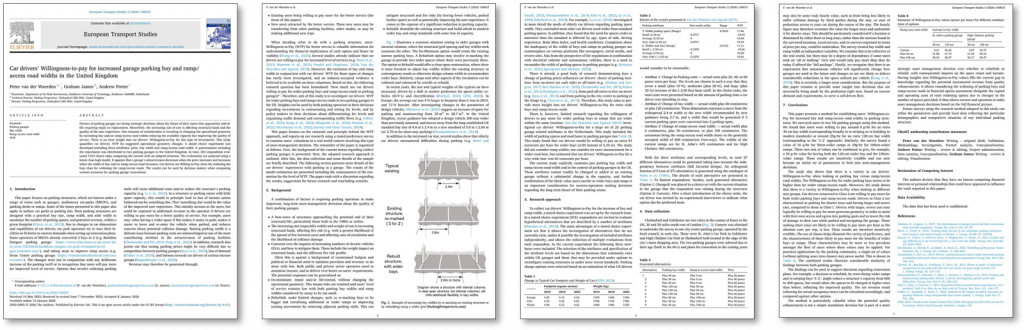
Car drivers’ willingness-to-pay for increased garage parking bay and ramp/access road widths in the United Kingdom Peter van der Waerden, Graham James and Andrew Potter. European Transport Studies, Volume 3, December 2026 https://doi.org/10.1016/j.ets.2026.100052 Full text or 2.6MB PDF
Local Transport Today (LTT) columns
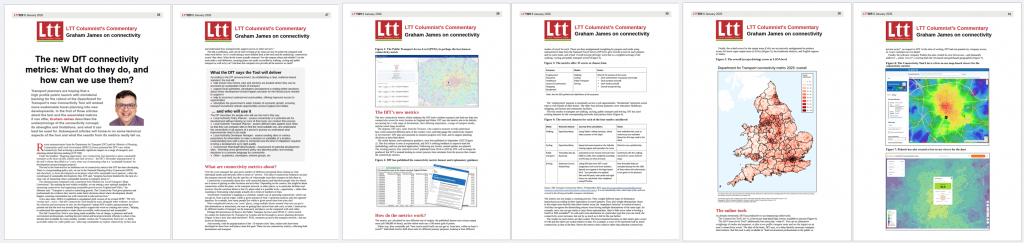
Columns are initially published in Local Transport Today, and later made available to all at tapas.network.
The new DfT connectivity metrics: What insights do the first outputs give us? (LTT931, 4 February 2026)
The new DfT connectivity metrics: What do they do, and how can we use them? (LTT928, 8 January 2026)
Revised values of travel time savings for road freight: what the new TAG says – and what it could mean (LTT925, 30 October 2025)
Other publications
The Green Book Review and what this means for transport business cases
A think piece from the Transport Planning Society’s Governance, Appraisal and Business Case Modelling policy group. Co-authored by Neil Chadwick, Joe Charlesworth, Graham James and Tom van Vuren. Webpage PDF (745KB)
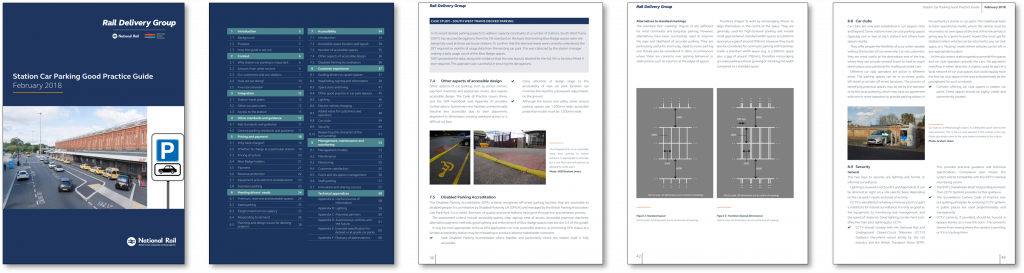
Station Car Parking Good Practice Guide (Rail Delivery Group, 2018)
Graham was the lead author of this guide to best practice and lessons-learnt in providing good-quality station car parking.