 by
by Graham celebrates an uplifting good-news day on his home patch
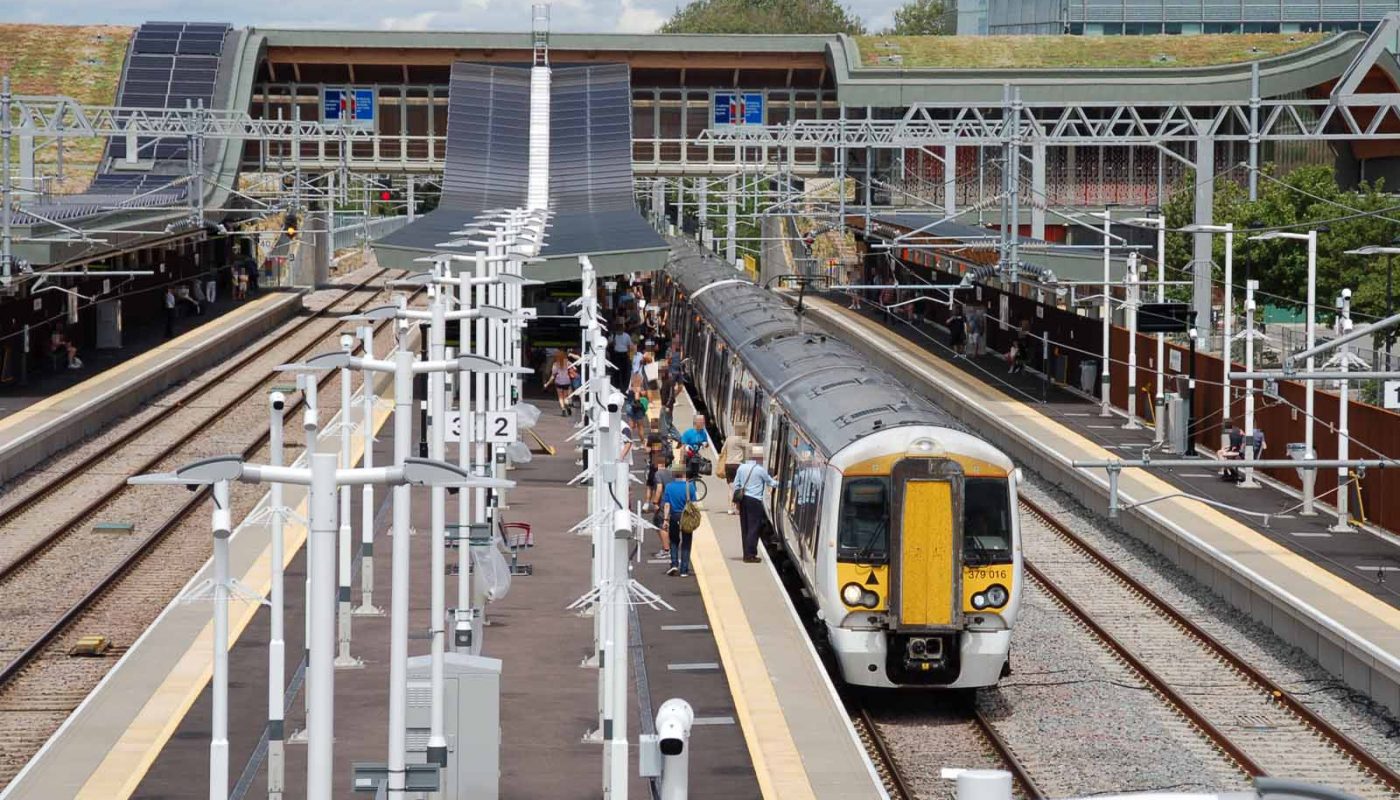
Today’s post celebrates the opening of Cambridge South station last weekend. It’s been a long time coming: part of the planning vision for many years, and a local aspiration for even longer.
It’s much-needed. A few years ago, before it got the go-ahead, I managed a project that took a holistic look-ahead at the growing transport needs of the Cambridge Biomedical Campus which the new station serves. At the time (2017), 17,000 people worked on the campus and this was predicted to grow to 26,000 by 2031. And that’s before you include patients and visitors at the several hospitals on site. For people living in some of the southern parts of Cambridge, it will also become their new local way in to the rail network. But it’s primarily a ‘destination’ station.
Making it happen wasn’t straightforward. As ever, you don’t just need a good planning case for having a station. You also need the local political and stakeholder support, and you need the funding – which in our current system means being able to persuade central government to invest here.
You also need a proposal that works operationally. On today’s crowded railway, particularly somewhere as busy as the southern approach to Cambridge, you cannot just plonk down a station and assume all will be fine. An extra stop creates not just extra journey times for other users on the train, but also has effects on the timetable that could ripple out so far as to be undeliverable. Hence the new station needed four platforms (to allow a second train to keep going into the station while the first is at or leaving the other platform) rather than two. it also needed a hefty upgrade to nearby Shepreth Branch Junction, where the King’s Cross and Liverpool Street lines meet and diverge, to claw back some of the time impacts. This in turn required corresponding changes to the overhead electric wires, and a lot of new signals. It’s a big job. But that’s what it takes on a busy part of the railway system.
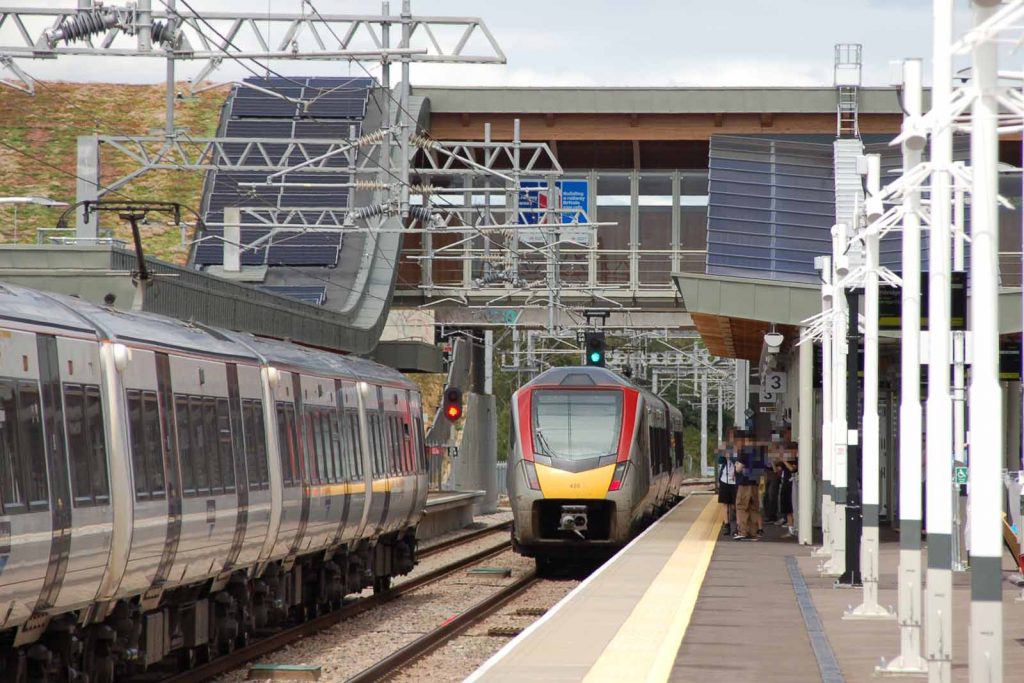
If you’re interested in the railway engineering aspects of this, YouTube has a fascinating presentation to the Railway Engineering Institution (formerly the Permanent Way Institution) by Philip Holbourn, Designated Project Engineer. As well as the issues I’ve mentioned, he also covers the stageworks and many of the other practicalities of the station as a civil engineering project.
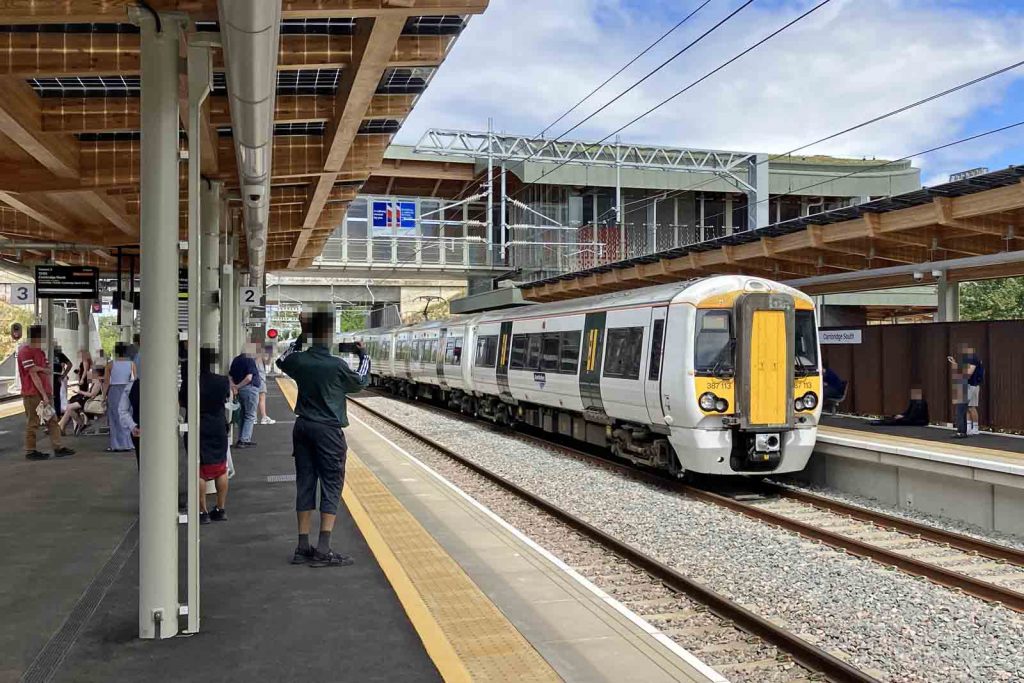
Opening day was Sunday 28 June. Some hardy souls make sure they were on the first train. I’m not a morning person, so I went along in the lunchtime heat. Plenty of others will have posted their own reviews, videos and detailed comments on everything from the signs to the solar panels, so I’ll just cover a few points that stood out for me.
First, it was lovely to see many young enthusiasts enjoying the occasion. And there seemed to be a good number of non-enthusiast passengers already making use of the station on day one.
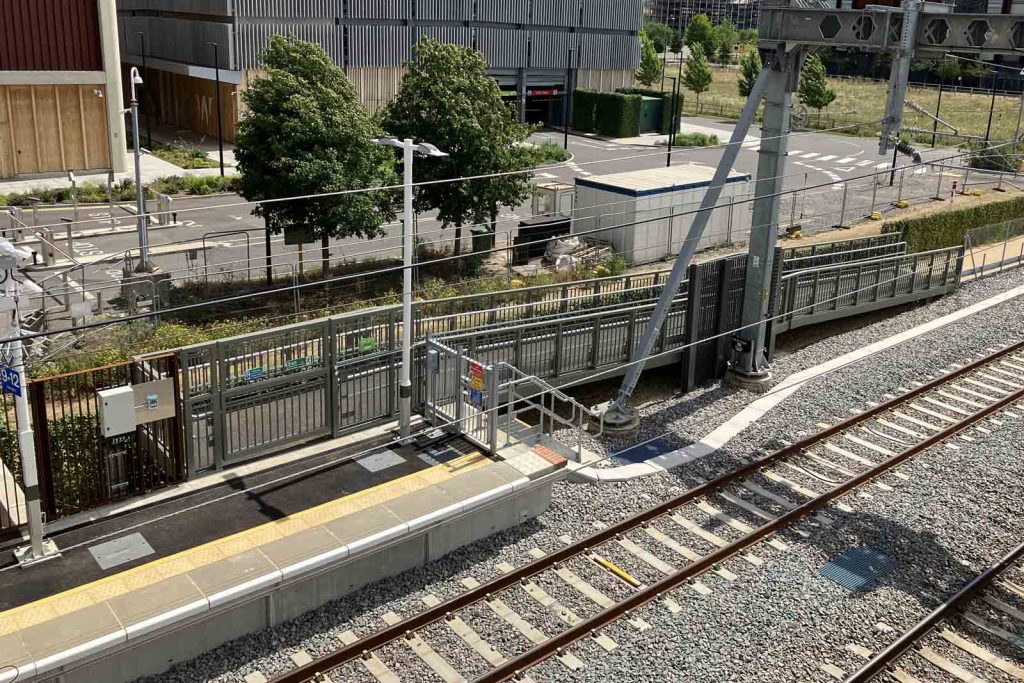
Building a station of this size is much more onerous than it used to be. An obvious example is that current standards mean (in effect) you need fire escapes at the far end of the platforms. With an island platform in the mix, this means a bonus footbridge too. The video I linked above has some interesting background on this aspect of the design.
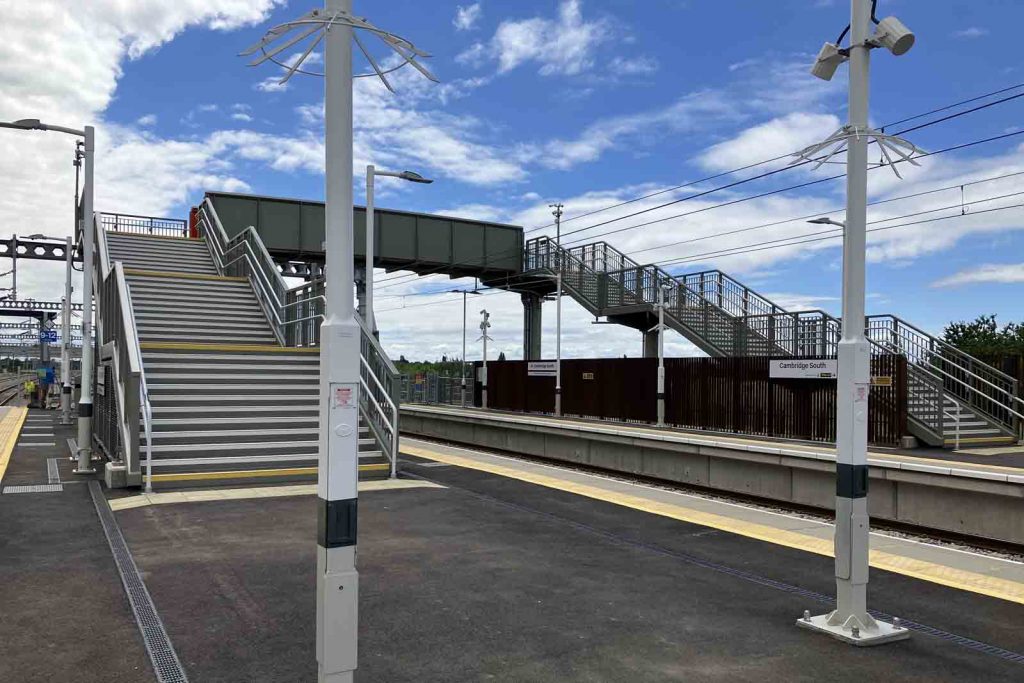
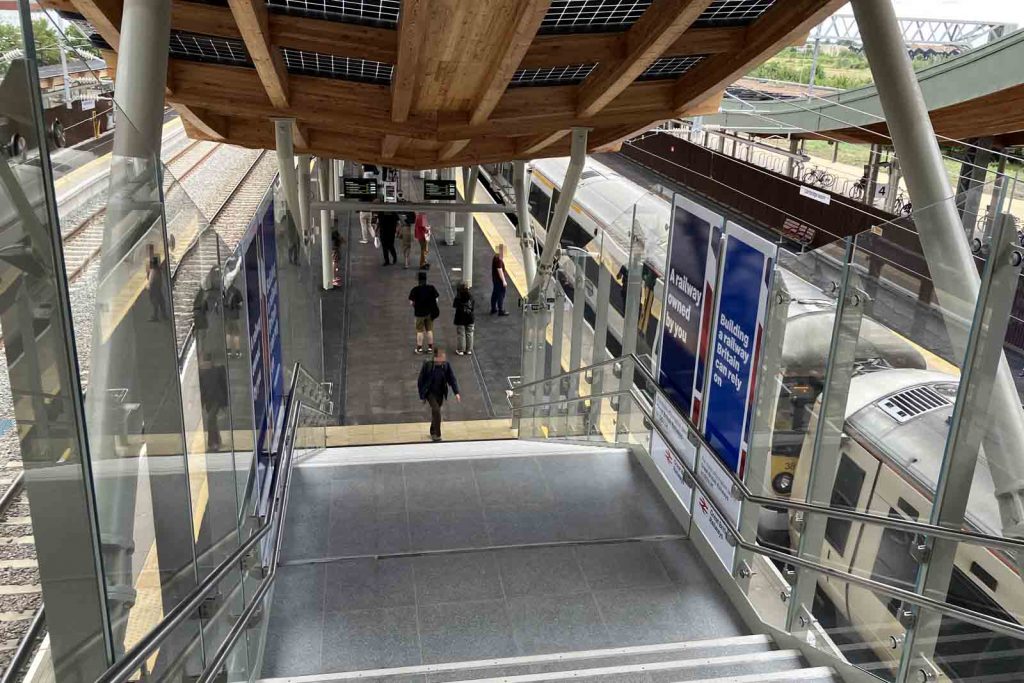
The main footbridge and sets of staircases are rather striking. The visible engineered timber has (to me) echoes of Manchester Oxford Road. The glass walls offer light and viewpoints.
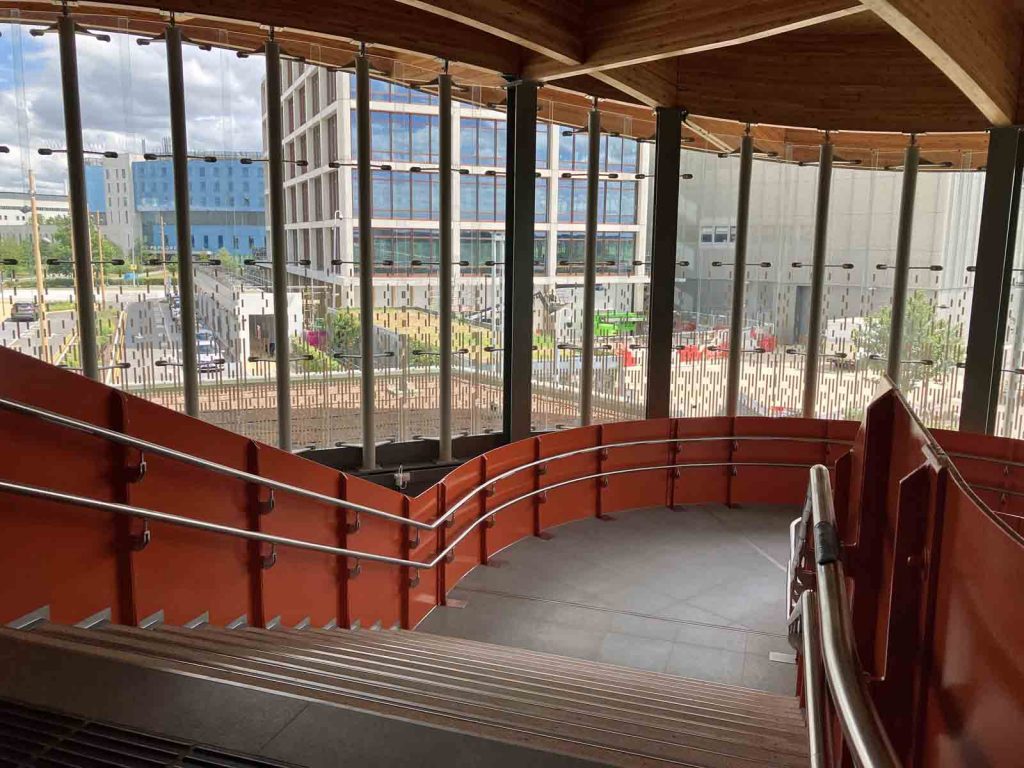
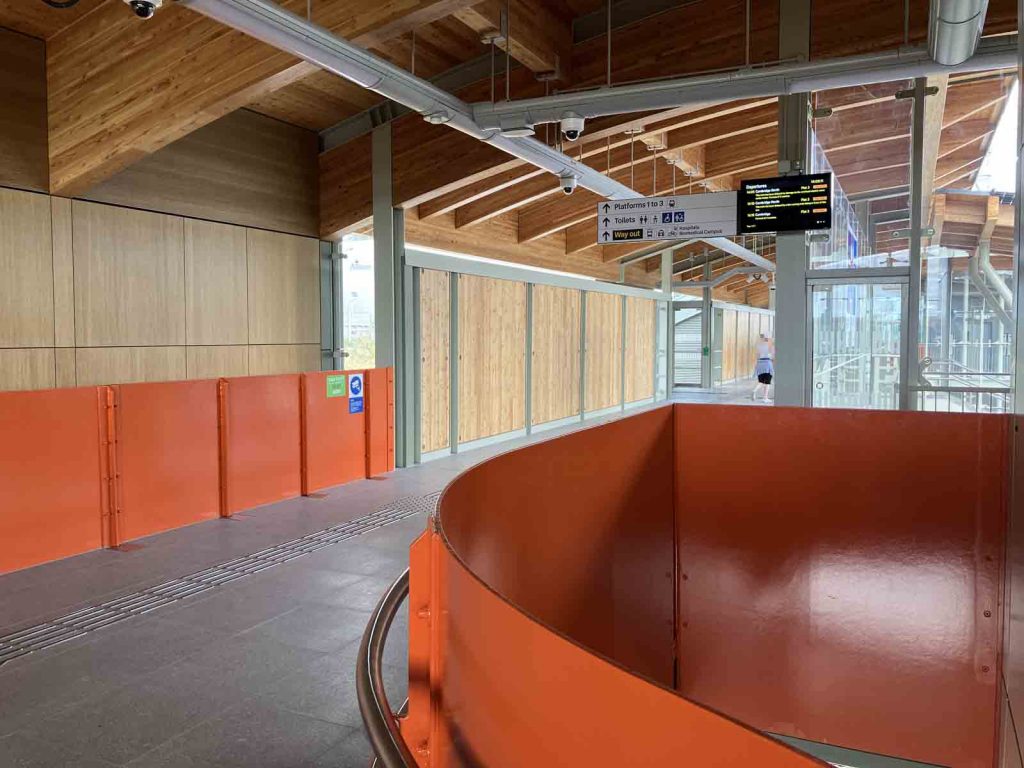
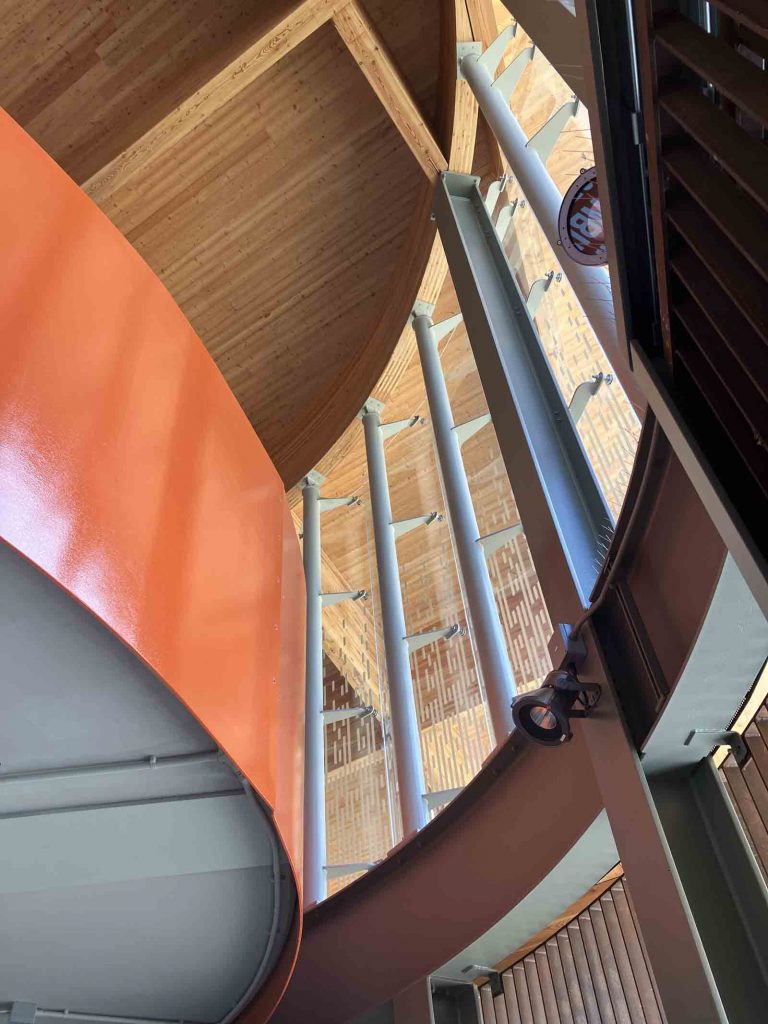
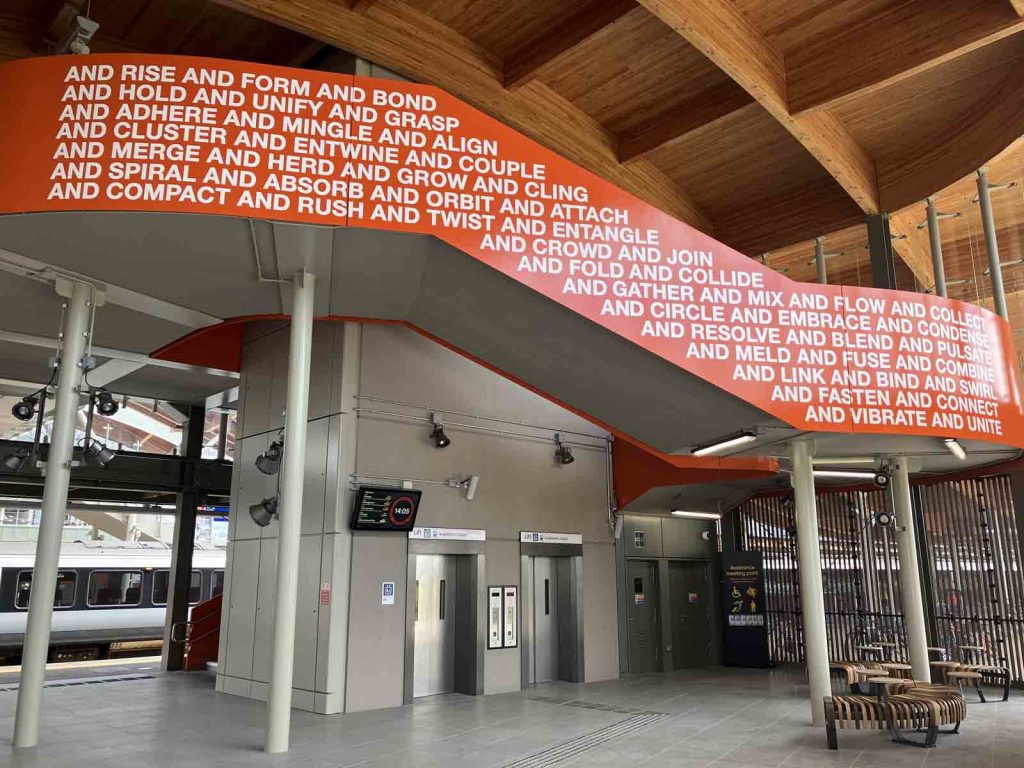
I warmed to the retro and reassuringly solid-looking steel parapets on the footbridge steps within the east and west side buildings. The orange colour (which I assume is not part of the GBR palette) works well.
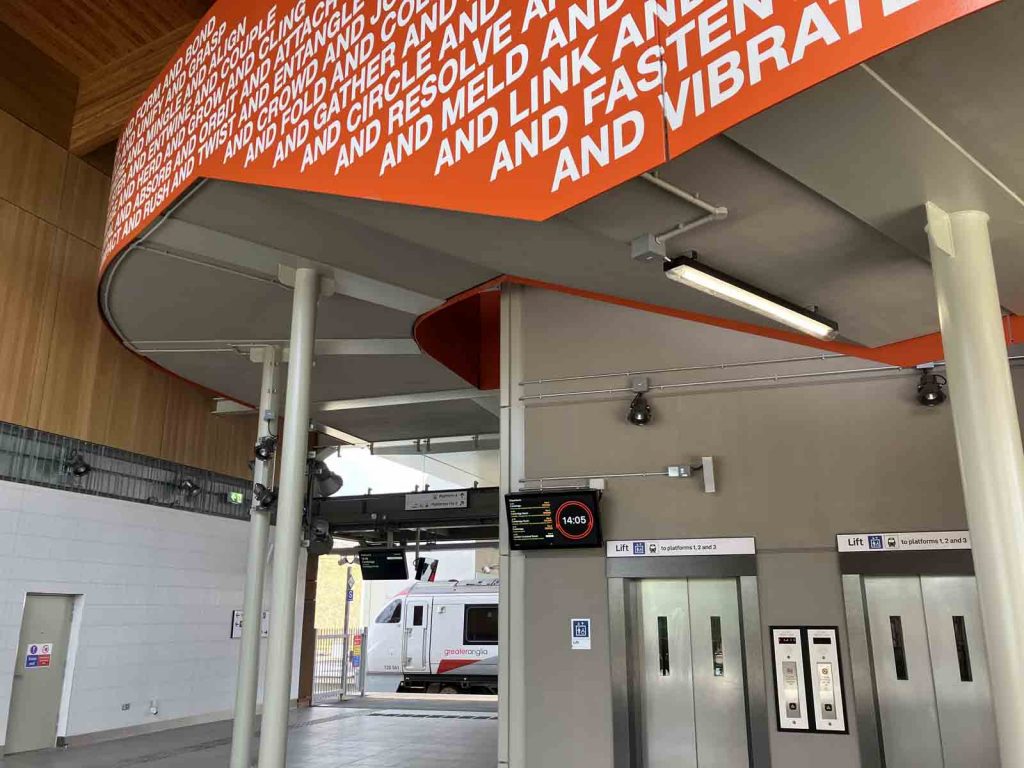
The parapets are also the canvas for the station’s public artwork. The piece (in two diferent versions, on on each staircase) is by Mark Titchner, who was previously nominated for the Turner prize, and is called ‘Together We’. According to Network Rail:
“The concept of the work focuses on the circulation and coming ‘together’ of people, with its origins in circulatory systems both medical and in transport. This draws on Mark’s research into Cambridge physician William Harvey, the first known physician to describe the circulatory system in detail.”
The much-mentioned Great British Railways (GBR) branding is quite gentle: mainly motivational posters, plus the colourful gatelines and a GBR-branded water dispenser.
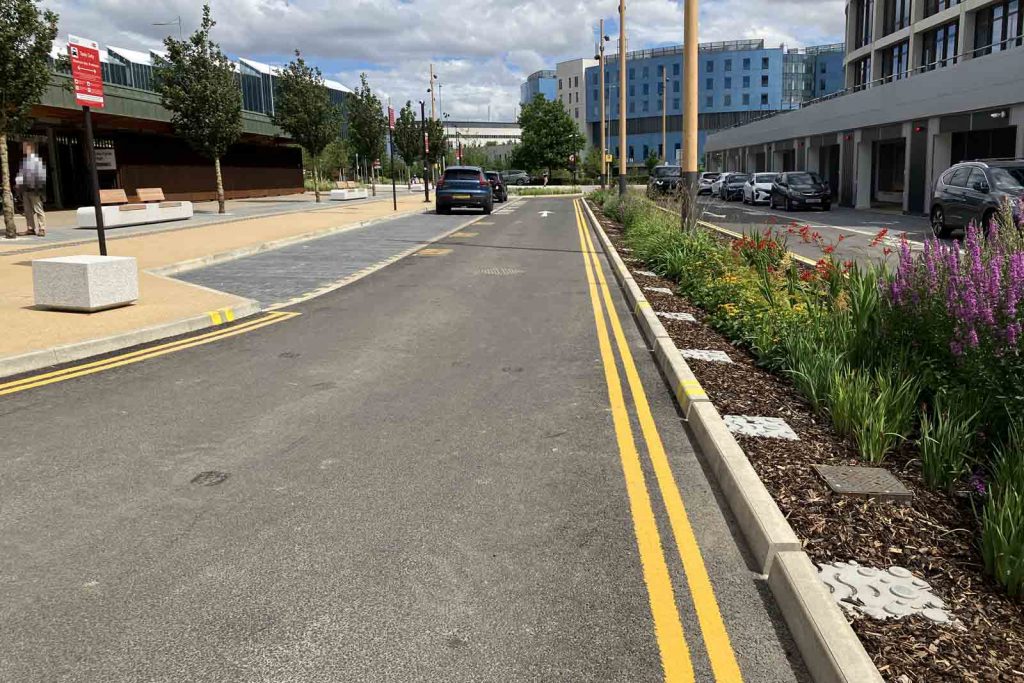
Access to and from the outside world is available on both sides of the line. The east side has cycle parking, a drop-off area and a taxi rank. This side is the route to the biomedical campus, and I suspect it will quickly become busy.
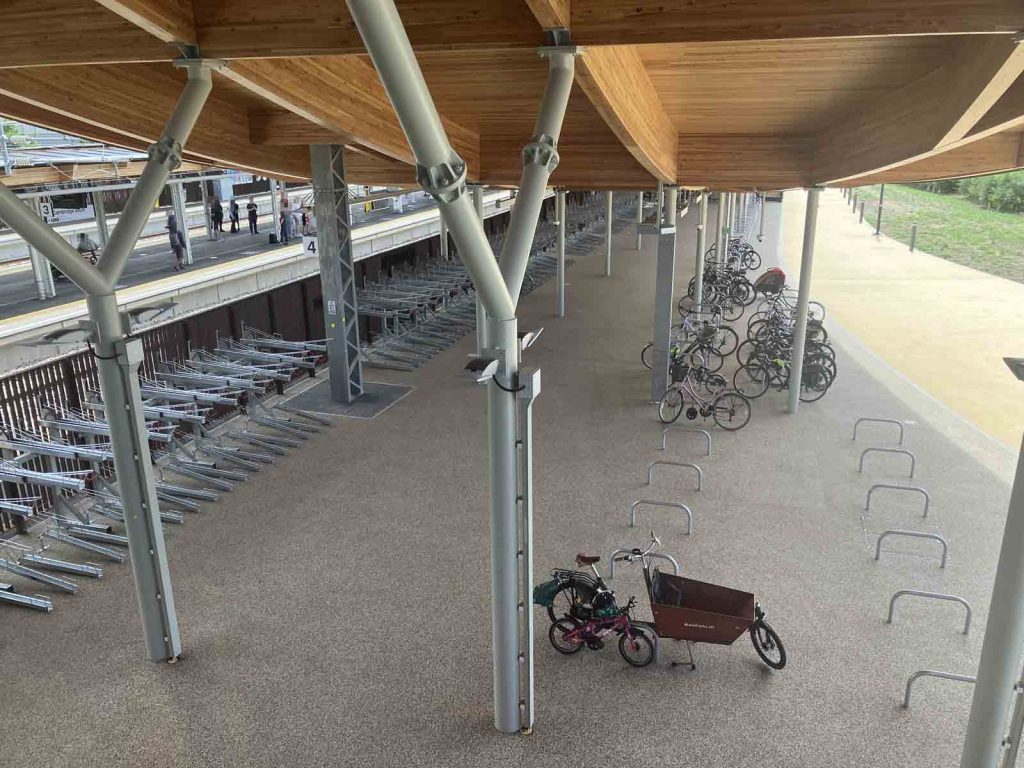
The west side has pedestrian and cycle access from the Trumpington direction, and a large amount of cycle parking, including specific provision for non-standard cycles.
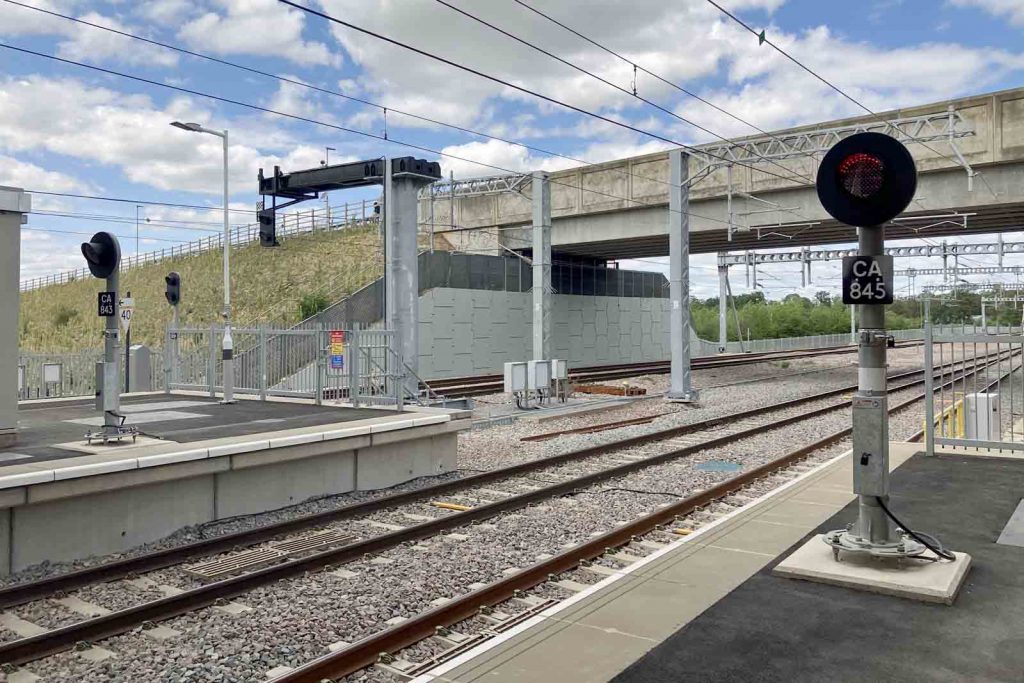
Back down at the platform ends, the new-look Shepreth Branch Junction has given us what I think is the Cambridge area’s first use of a flashing-yellow aspect sequence for junction signalling. This is for the trains to King’s Cross. Previously this movement was approach-controlled from red. The new, faster crossover and clever adjustment of linespeeds mean the less-restrictive flashing-yellow method can be used, which in turn has clawed-back some of the journey time added by the station call. The signal with the flashing yellow is CA836, the platform 2 starting signal. If you want to know how these junction signalling arrangements work, here (free registration required) are the rules and explanatory guidance.
The signalling has also been cleverly designed so that if Cambridge station (the existing central one) is closed for engineering work, trains from London can run into all four Cambridge South platforms and turn back again. For those like me who traditionally face a schlep to Royston on the affected weekends, this will make life a little easier.
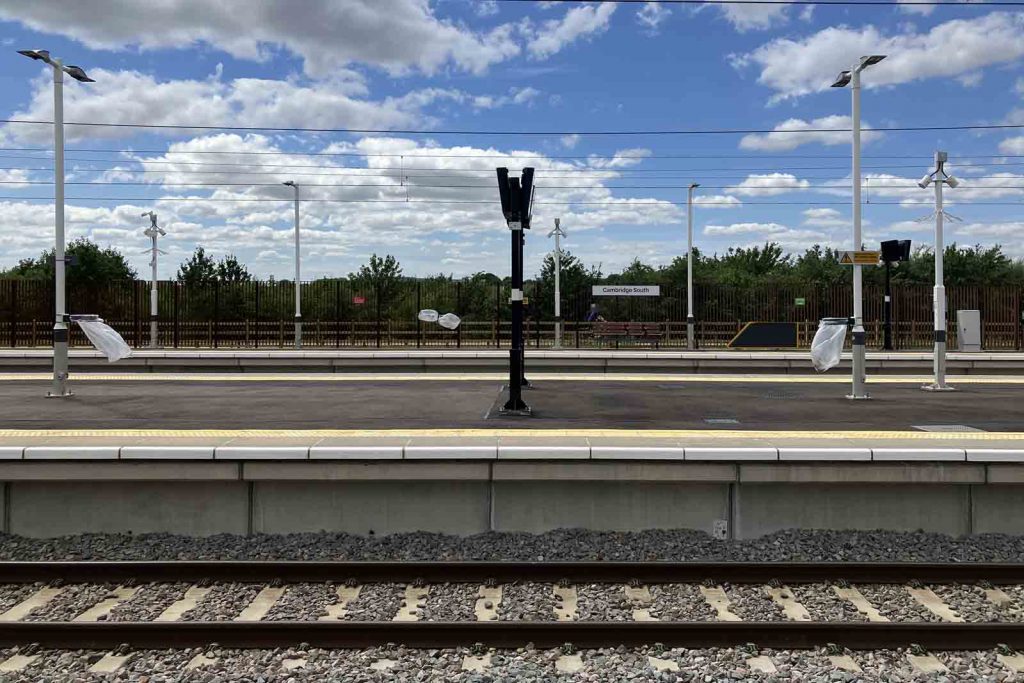
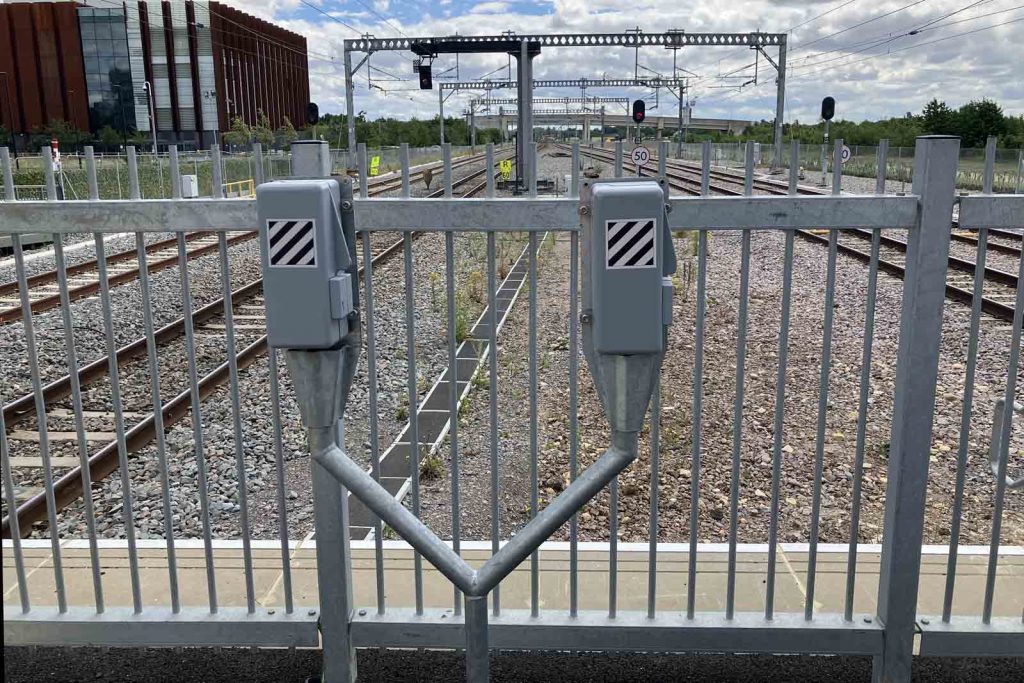
The pre-rusted railings can look severe from some angles, but looking across the platforms they feel very open. It’s a clever design.
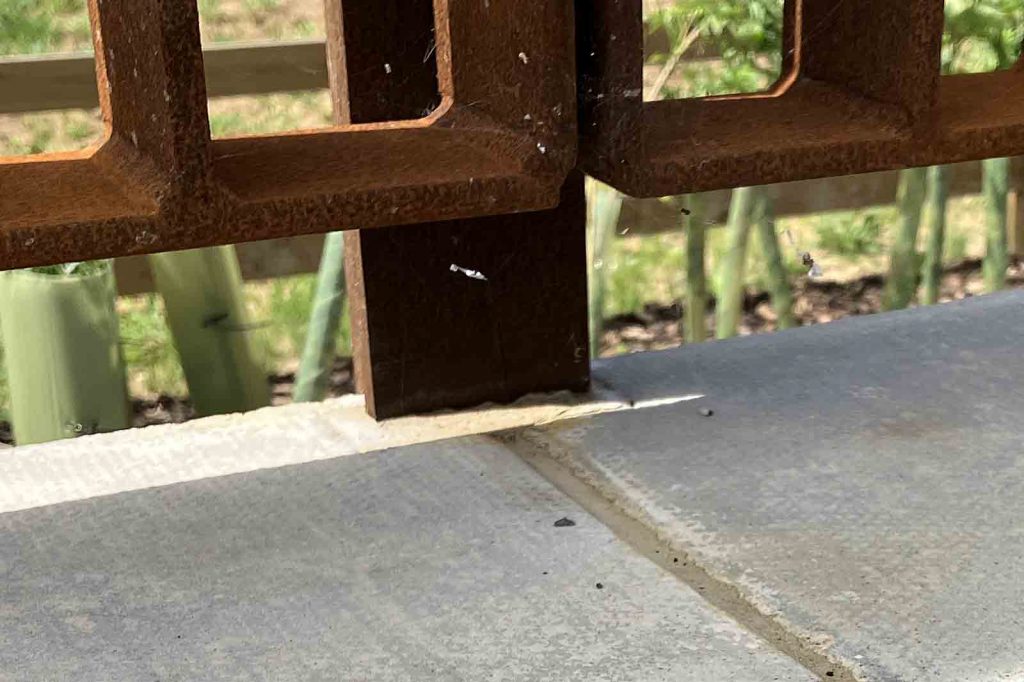
Even with today’s construction methods, there’s still a degree of old-style cutting of materials, and traditional trades.
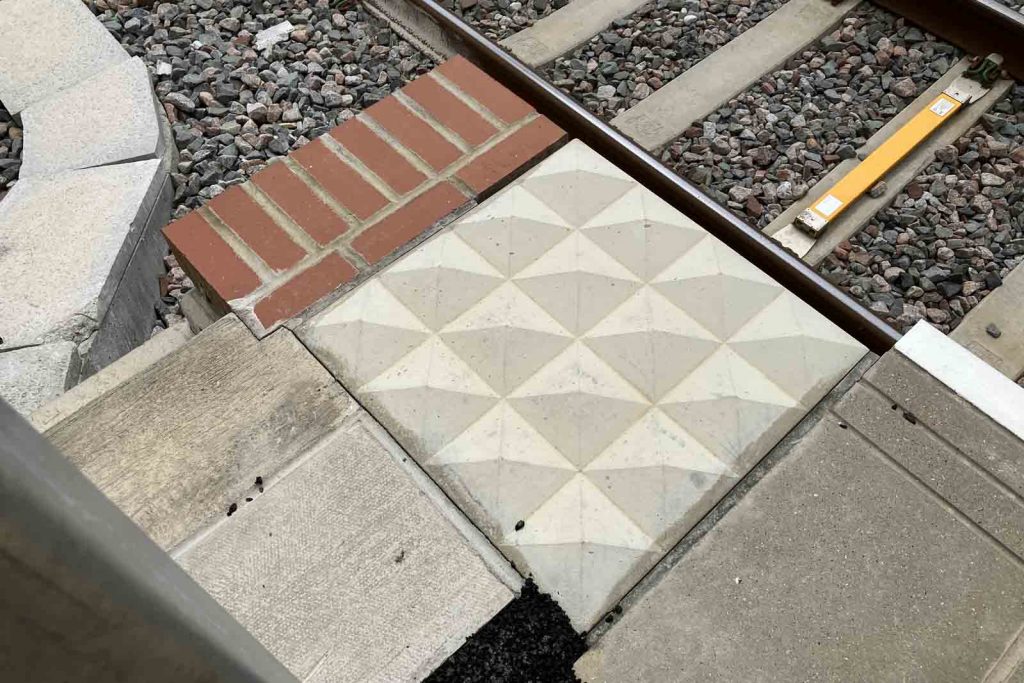
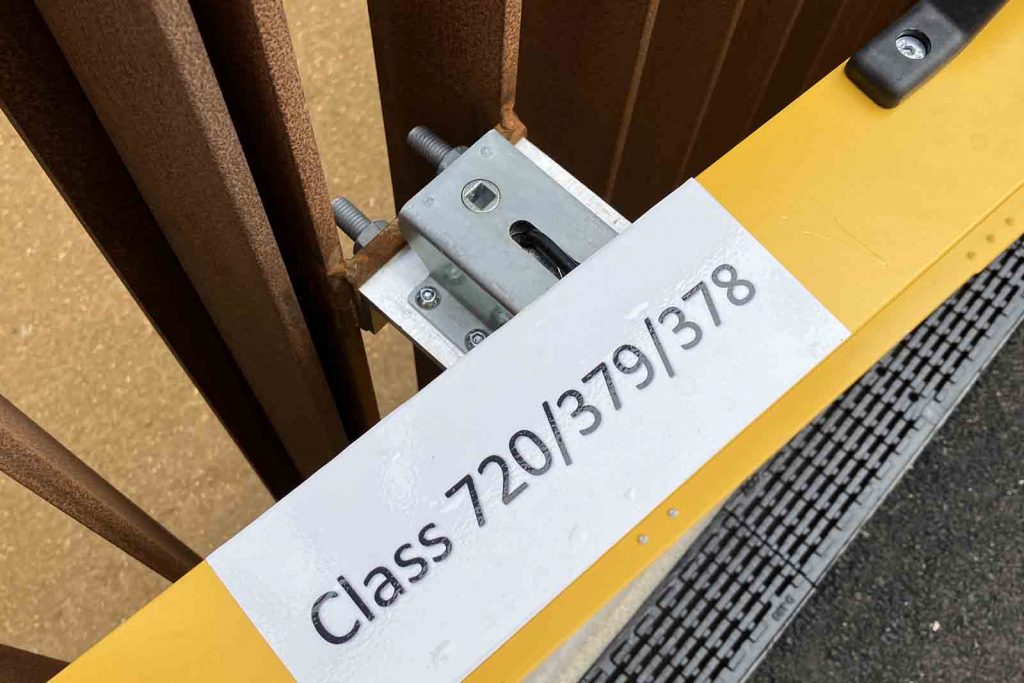
An enormous number of small details need to be considered, designed and intalled.
And finally, a big thank-you to all those whose work over the years – on site or in the background – helped to make it happen. As the rather apt words on the staircase remind us, this impressive and much-needed station will help people to connect, and link, and mix, and flow, and mingle, and gather…