 by
A first briefing from Graham on the new business case guidance and updated Green Book discount rates, published alongside the Budget
I don’t normally do ‘reaction to the budget’ posts – there are plenty of those to go round. But two significant bits of transport planning guidance and ‘rules’ came out alongside yesterday’s Budget. As I’ve previously posted about both of these, I thought readers would appreciate a quick update and ‘first reaction’ .
Place-based business cases
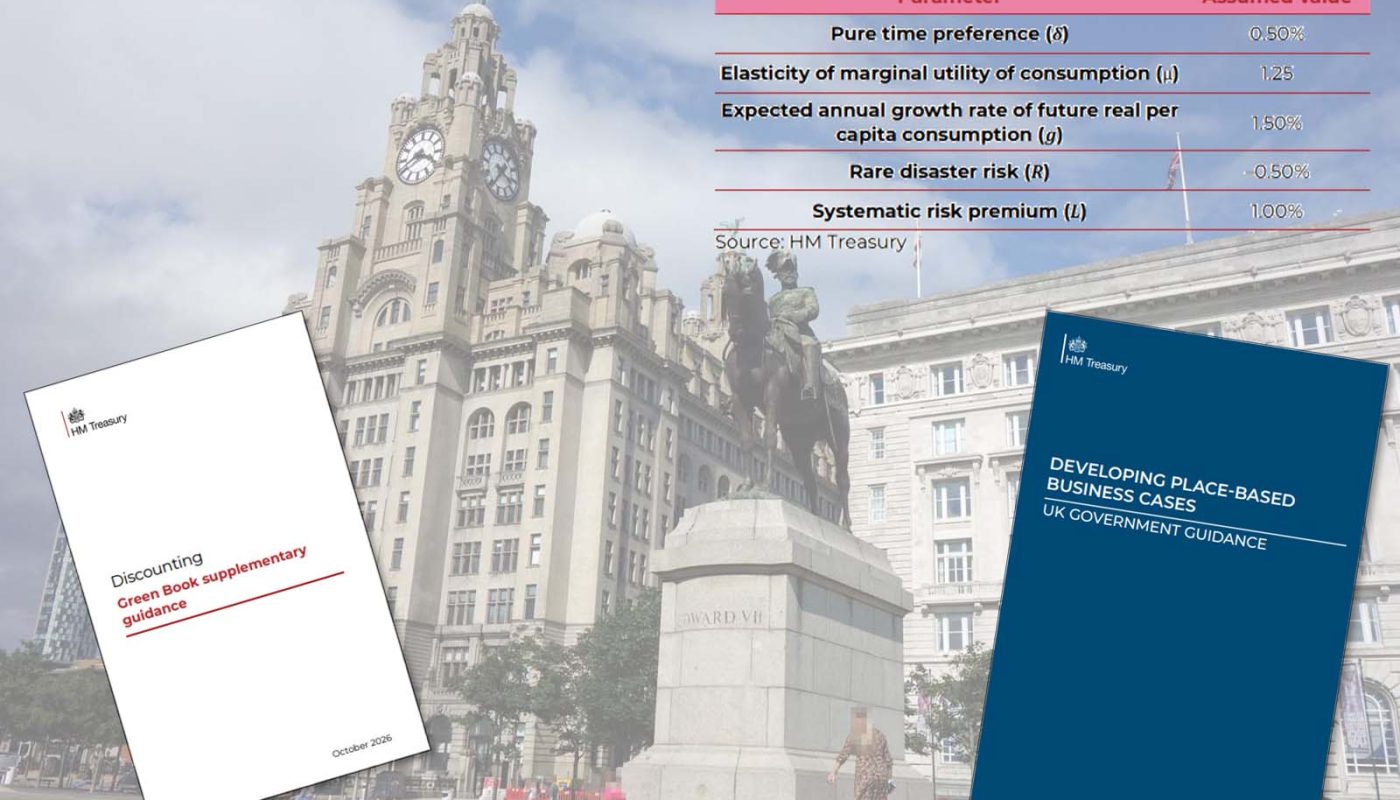
As was expected, the new guidance on place-based business cases (PBBCs) has been published.
If the idea of PBBCs is new to you, or you just want a refresher on the idea, you can read my earlier post about the background here.
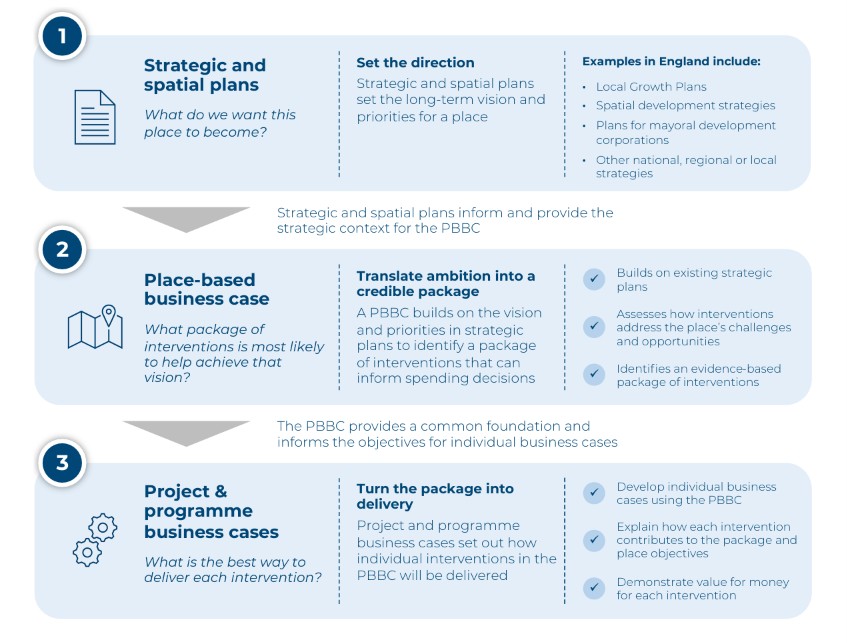
In that piece I mentioned my view that PBBCs ought to be place-level ‘parent cases’ that provide scheme or programme business cases with:
- A clear, place-specific vision and outcomes framework
- An agreed rationale for intervention that is cross-sectoral (not a single-mode or single-scheme narrative)
- A logic explaining why the benefits of the package is greater than the sum of individual schemes
- Expectations for how schemes should describe their contribution to the whole package
But I was also cautious about the risk that a PBBC could become the ‘business case for everything’, and that the economic case might re-create the too-much-focus-on-the-numbers problem that PBBCs are supposed to solve.
I’ll be digesting the 40-page guidance now released, to see the detail and consider where it leaves us.
I’ll also be speaking on PBBCs on 4 November at the Local Transport Summit in York. If you’re there, say hello – and join in the discussion!
Green Book Discount Rate Review
As was also expected, the Treasury has published its response to the Green Book Discount Rate Review. Here’s my earlier post with the background to this.
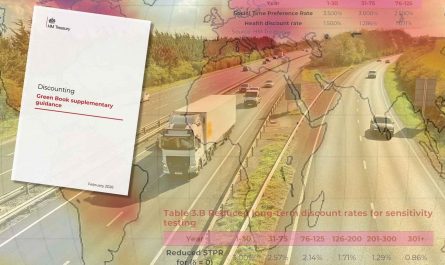
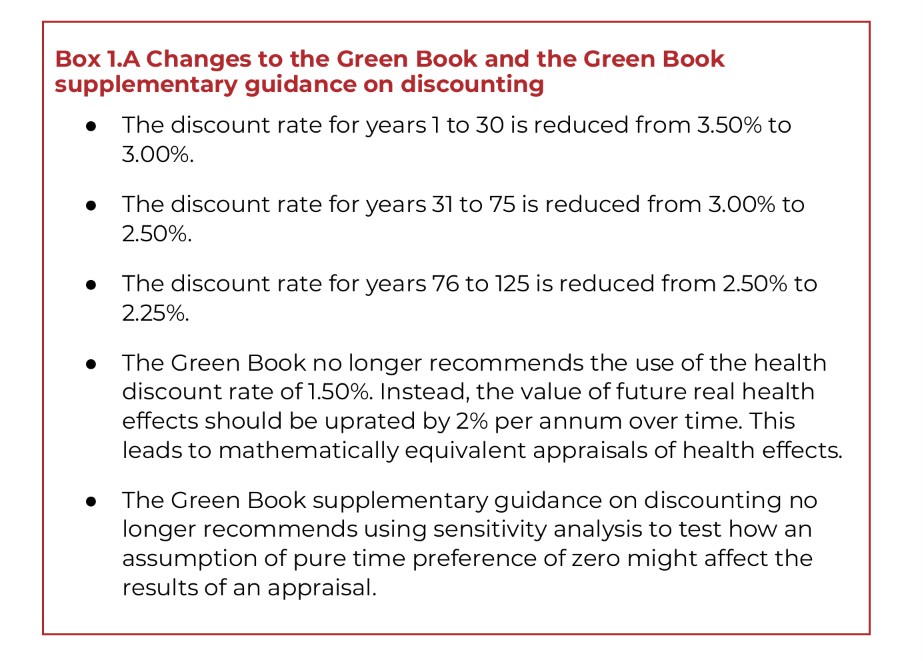
We already knew, from an announcement in September, that the headline discount rate would reduce from 3.5% to 3.0%. This was in line with one of the review’s headline recommendations. But until yesterday, we didn’t know whether the Treasury had accepted the review’s rationale for doing so, or had come to the same answer via different logic. Nor did we know about some of the other loose ends, including the declining profile from year 31 and whether (in line with the review’s recommendations) the curious sensitivity test excluding pure time preference would be abandoned.
We now have the Treasury’s response, along with updated Green Book supplementary guidance on discounting that sets out the new discount rates and how they are derived. I would expect these to be brought into the DfT’s Transport Analysis Guidance (TAG) via the TAG Databook in the next round of Forthcoming Changes. But we already know what to expect.
Key points confirmed
Most of the review’s recommendations have been accepted, including:
- The new headline rate of 3.0% (vice 3.5%) for years 1-30, along with the review’s rationale for this. The biggest factor behind it is the introduction of a new element, the ‘rare disaster risk’ (shortened to ‘R’ in the jargon). This bumps the discount rate down by 0.5 percentage points.
- The declining profile from year 31 onwards: 2.5% (vice 3.0%) for years 31 to 75, and 2.25% (vice 2.5%) for years 76-125.
This means my earlier analysis remains valid: the benefit-cost ratios for our typical transport infrastructure projects will increase by about 16%. For some, this will be enough to take it over a ‘magic number’ and into a higher value-for-money category. But, as I wrote, this does not necessarily mean more things will get built: funding remains a constraint. And all such projects will get the same sort of boost, so your project still needs to be at the top of the pile (involving more factors than just the BCR, of course).
The Treasury also accepted the idea of discounting health impacts at the usual rate instead of the existing lower rate. The lower rate was introduced to recognise a particular technical issue that applies to health impacts. The new method recognises the issue in a different way, by adjusting the valuation figures rather than using a different discount rate. The numbers come out the same.
I like the new method, as having just one discount rate for everything makes the spreadsheet work easier within an appraisal. There’s one fewer banana-skin to slip-up on. Again I would expect DfT to flow this through into TAG and tools such as the Active Mode Appraisal Toolkit (AMAT).
I’m also pleased that the Treasury has followed the review’s recommendation to abandon the recently-introduced sensitivity test with a lower discount rate. I wrote previously about why this had been a questionable approach.
Economic resilience
One significant recommendation wasn’t accepted. The review recommended a different, lower discount rate for what it called “social insurance projects”. These are projects that ‘pay off at times of societal decline’, as the report puts it. Pandemic protection programmes, or investments that would protect society in a time of war, are examples of these. The way the maths works out, these should in theory have a lower discount rate. But the Treasury saw practical challenges in doing so. We are instead promised new Green Book supplementary guidance to “help appraisal practitioners assess the social benefits of economic resilience”.
Time to update your printout
It’s worth noting that as well as the updated supplementary guidance on discounting, the Treasury has also published an updated version of the Green Book itself. Some of the headline details of the discounting process appear in that main text, which has therefore had to be updated. Confusingly, both old and new versions of the PDF have identical covers dated just “2026” and identical publication details on the inside cover[1]. If you have the original (February) version, the relevant changes are in paras 6.54 to 6.58, 7.15, and 8.57 to 8.58. The Treasury have also taken the chance to correct some typos and wording errors – unrelated to discounting – in other parts of the text.
Keeping it all in proportion
Finally, as a bonus third item there is new guidance on developing proportionate business cases. ‘Proportionate’ is the jargon for doing the right work, and providing enough detail and analysis, to properly support sound decision-making, but not wasting time and effort by going over the top with it. I’ll write more once I’ve digested this new guidance.
[1] Perhaps there is a hitherto-undiscovered law of physics about conservation of banana-skins?